Futures CFDs: A Complete Guide to Trading CFD Futures Markets
Futures trading is one of the most popular ways to speculate on global markets, offering access to commodities, indices, and more through standardized contracts. However, traditional futures trading often comes with high capital requirements, fixed contract sizes, and a more complex account setup process, which can be a barrier for many traders. This is where futures CFDs come in, providing a more accessible alternative that allows traders to gain exposure to the same markets with lower capital, flexible position sizing, and a simpler onboarding experience.
Simply put, Futures CFDs let you trade price movements of futures contracts without owning the underlying asset, dealing with expiration dates, or navigating complex exchange rules. You get full market exposure to commodities, indices, and major forex pairs through a single trading account, with flexible leverage and the ability to trade smaller positions.
If you are exploring this option, then this guide will cover everything you need to know about futures CFDs. By the end of this article, you'll understand the pros and cons of futures CFDs, how they work, and whether it's the right method for you to trade the markets.
What Are Futures CFDs?
Futures CFDs are contracts for difference that derive their price from standard futures contracts rather than spot markets. When you trade futures CFDs, you’re speculating on the price movements of an underlying futures contract - whether that’s crude oil, index futures like the Dow Jones Industrial Average, or currency futures on major forex pairs. However, you are not physically holding the asset, and this enables you to get flexible trading terms - like the size of trade, the margin requirement, the need to deliver the product, and deal with expiration dates, and more.
Unlike traditional futures trading on regulated exchanges, futures CFDs are over-the-counter (OTC) financial instruments. This means you never take physical delivery, you’re not bound by futures exchange membership requirements, and you don’t need to manage contract rollovers manually. Your CFD provider handles the complexity while you focus on executing trades based on your technical analysis and fundamental analysis.
The key distinction: with standard futures contracts, you commit to buying or selling at a fixed future date. With futures CFDs, you simply trade the price difference between the opening and closing prices, with cash settlement and no delivery obligations.
Learn How to Start Trading CFDs
What is the Difference Between Futures CFDs, and Cash/Spot CFDs?
Cash or spot CFDs reference the current market price of an underlying asset - currencies, commodities, indices, equities - without any expiration structure. Futures CFDs specifically track futures contracts, which include term structure, cost of carry, and the mechanics of contract expiry.
Expiry and rollover: Spot CFDs have no expiration date. Futures CFDs reference contracts that do expire, but your broker typically manages rollovers automatically, or offers non-expiring synthetic versions that eliminate this concern entirely.
Pricing structure: Futures contracts incorporate expectations about supply, demand, storage costs, and interest rates. This creates basis differences between spot and futures prices. When trading futures CFDs, you’re exposed to these term structure dynamics rather than immediate spot values.
Settlement mechanics: Both settle as cash differences, never physical delivery. However, futures CFD pricing reflects the underlying futures contract’s characteristics, including potential contango or backwardation in commodity markets.
Financing costs: Spot CFDs typically carry overnight financing charges. Futures CFDs may have spread costs, plus financing, plus potential roll costs when the underlying contract expires, factors that experienced traders factor into their CFD trading strategies.
Futures Contracts vs Futures CFDs
Here's a summary of the key differences between futures and futures CFDs:
| Factor | Futures Contracts (Exchange-Traded) | Futures CFDs (Broker/OTC) |
|---|---|---|
| Where Traded | Centralized exchanges (e.g. CME, NYMEX) | OTC via brokers & liquidity providers |
| Pricing Source | Exchange order book (transparent, standardized) | Broker-derived prices (from LPs + markup) |
| Contract Size | Fixed & standardized (e.g. WTI = 1,000 barrels) | Flexible (can trade fractions like 0.01 lots) |
| Minimum Trade Size | 1 contract (or micro versions like 100 barrels) | Highly flexible (micro positions allowed) |
| Tick Size (Futures) | Fixed minimum increment (e.g. WTI = $0.01 = $10 per contract) | Uses “pips” or decimal pricing (varies by broker) |
| Tick / Pip Value | Determined by contract size × tick size (e.g. $10 per tick in WTI) | Depends on position size (scalable per lot size) |
| Margin Requirements | Exchange-set (e.g. ~$2k–$4k for crude oil futures) | Broker-defined, often lower and more flexible |
| Leverage | Moderate (regulated, fixed margin system) | Higher leverage (depends on broker & regulation) |
| Expiry Date | Yes (monthly/quarterly contracts) | Usually no expiry (continuous pricing) |
| Settlement | Physical or cash settlement | Cash-settled only (no delivery) |
| Liquidity | Deep institutional liquidity (high volume) | Depends on broker liquidity providers |
| Execution | Exchange matching engine (no dealing desk) | Broker execution (may be market maker or STP) |
| Transparency | High (order book, volume data available) | Lower (no central order book) |
| Costs | Commission + tight spreads | Spread + possible commission + swaps |
| Overnight Costs | No swap (but built into futures pricing) | Swap/financing fees charged daily |
| Pricing Structure | Includes cost of carry (contango/backwardation) | Tracks spot or synthetic futures price |
| Regulation | Highly regulated exchanges | Broker-dependent regulation |
| Accessibility | Higher capital required | More accessible for retail traders |
| Risk Profile | Larger exposure per contract | Adjustable risk via position sizing |
Why Traders Choose Futures CFDs
Retail traders and advanced traders alike report practical advantages that make futures CFDs their preferred vehicle for market exposure.
Capital efficiency in action
One commodities trader noted that accessing crude oil futures directly required significant margin deposits and exchange membership considerations. Through futures CFDs, the same leveraged exposure became available with a fraction of the trading capital, allowing proper risk management across multiple positions rather than concentration in a single market.
Simplified market access
Index CFDs and commodity CFD positions let traders move between stock indices, energy markets, and agricultural futures from one platform. No switching between exchanges, no separate accounts, no complex clearing relationships. Most traders find this streamlined approach lets them focus on market conditions rather than administrative logistics.
Flexibility during volatile markets
Futures traders using CFDs report easier position sizing during high market volatility periods. Rather than committing to full standard futures contracts, they scale exposure precisely, taking smaller positions when price fluctuations increase and uncertainty rises.
Hedging without delivery concerns
Business owners hedging commodity risk have used futures CFDs to manage risk without storage obligations or delivery logistics. A small importer hedging currency exposure, for example, locks in exchange rates via currency futures CFDs without the full complexity of regulated exchanges.
Watch Futures CFDs in Action
In order to understand how futures CFDs work, you'd better see an example. This is because not many traders really understand the difference between futures and futures CFDs, and this is what we are going to show you now.
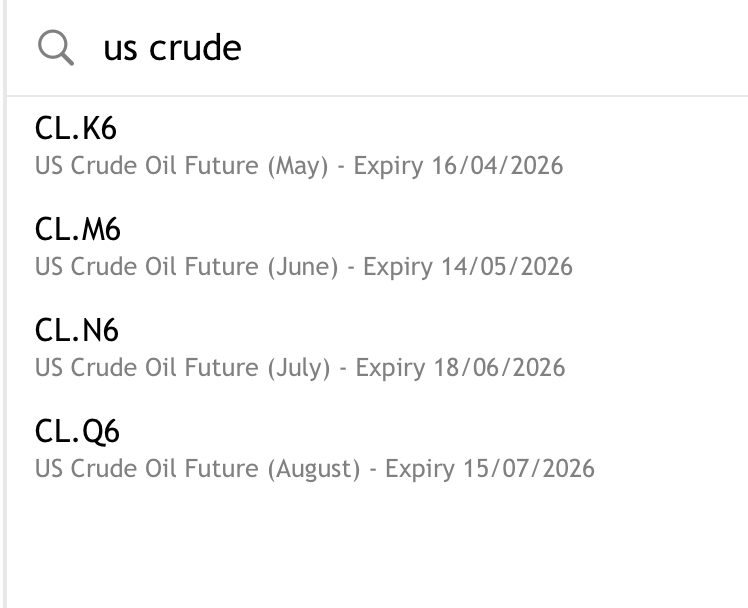
For this demonstration, we use WTI crude oil futures CFDs.
First, in our MT4/5 platform, navigate to the watchlist, energies, and find US Crude Oil futures.
Now, click on the New Order button. You'll then see a bid and sell quote, and the trade volume. As you can see, the spread of a futures CFD stands at 2, which is slightly different than how futures spreads work via the exchange. Note that you can also choose a significantly smaller trade volume compared to futures contracts. This is because you trade CFDs, and the trade size is not as large as that of futures contracts.
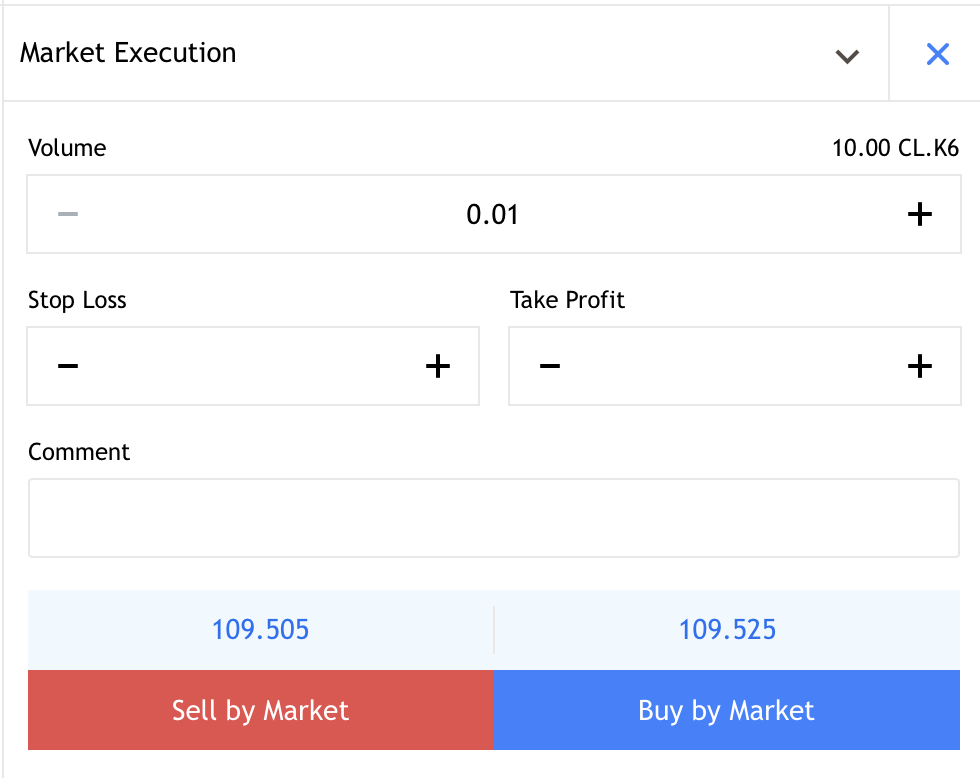
Once you are ready to place an order, you can click on Buy or Sell, and a future CFD position will be live.
Ready to experience it yourself? Open a demo account and trade futures CFDs risk-free with virtual capital before committing real funds.
What Futures CFDs Are Offered by Switch Markets?
Switch Markets offers a wide range of futures CFDs across major global markets, allowing traders to speculate on price movements without owning the underlying asset. Traders can access futures CFDs on leading stock indices, commodities, metals, energy products, and soft commodities, all from a single trading platform. The broker also provides flexible leverage, competitive spreads, and support for both MetaTrader 4 and MetaTrader 5, making it suitable for active and professional traders alike.
| Asset | Asset Class | Main Exchange | Typical CFD Leverage* |
|---|---|---|---|
| DAX 30 | Index | Eurex | Up to 1:200 |
| Euro Stoxx 50 | Index | Eurex | Up to 1:200 |
| CAC40 Index Future | Index | Euronext | Up to 1:200 |
| FTSE 100 | Index | ICE Futures Europe | Up to 1:200 |
| USD Index | Index | ICE Futures U.S. | Up to 1:100 |
| E-mini S&P | Index | CME Group | Up to 1:200 |
| E-mini Nasdaq | Index | CME Group | Up to 1:200 |
| Dow Jones Industrial Average | Index | CBOT / CME Group | Up to 1:200 |
| Nikkei 225 | Index | Osaka Exchange / CME | Up to 1:200 |
| Silver | Commodity (Metal) | COMEX | Up to 1:500 |
| Sugar | Commodity (Soft) | ICE Futures U.S. | Up to 1:100 |
| Coffee C | Commodity (Soft) | ICE Futures U.S. | Up to 1:100 |
| Cocoa | Commodity (Soft) | ICE Futures U.S. | Up to 1:100 |
| US Coffee | Commodity (Soft) | ICE Futures U.S. | Up to 1:100 |
| Cotton | Commodity (Soft) | ICE Futures U.S. | Up to 1:100 |
| Copper Futures (25,000 LBS) | Commodity (Metal) | COMEX | Up to 1:100 |
| Brent Crude Oil Future | Commodity (Energy) | ICE Futures Europe | Up to 1:500 |
| US Crude Oil Future | Commodity (Energy) | NYMEX | Up to 1:500 |
| NGAS Futures | Commodity (Energy) | NYMEX | Up to 1:100 |
How to Start Trading Futures CFDs
Here's what you need to do to start trading futures CFDs with Switch Markets:
1. Choose Your Market – Select from commodity futures like crude oil, or index futures tracking global markets. Consider liquidity, trading hours, and which underlying market aligns with your trading knowledge.
2. Set Position Size – Determine your leveraged trading exposure based on your risk tolerance. Calculate how much trading capital you’re willing to risk, factor in margin requirements, and ensure you maintain an adequate buffer for price fluctuations. For better position size techniques, you can use our free lot size calculator.
3. Execute Trade – Enter long or short CFD positions with instant execution. Trade price movements in either direction—go long if you expect prices to rise, take a short CFD position if you anticipate falling markets. Your selling price minus your entry determines profit or loss.
4. Manage Risk – Monitor margin levels continuously. Use stop-loss orders to cap potential losses, take-profit orders to lock in gains, and maintain proper risk management discipline. Never risk more than a small percentage of your account on any single trade. You can also learn more about our risk manager EA in this guide if you wish to automate you risk management.
No complex futures contracts, no delivery concerns, no exchange rules to navigate—start trading in minutes.
Wrapping Up
To sum up, Futures CFDs offer a streamlined path to futures markets for traders seeking market exposure without the traditional complexities of futures trading. Lower capital requirements, flexible position sizing, and the ability to trade both rising and falling markets make them accessible to retail traders while still serving the needs of experienced traders.
However, leveraged trading carries substantial risk. Financing costs accumulate on positions held overnight, counterparty risk exists with OTC instruments, and poor risk management can result in losses exceeding your initial deposit. Success requires solid trading knowledge, disciplined use of risk management tools, and realistic expectations about the risks involved.
The traders who thrive with futures CFDs combine technical analysis strategies with fundamental analysis, maintain a trading journal to refine their approach, and never stop learning about the financial instruments they trade. Whether you’re using futures CFDs for speculation or hedging risk, understanding these financial markets deeply is the foundation of sustainable results.
Frequently Asked Questions
Here are some common questions regarding futures CFDs:
How do futures CFDs differ from traditional futures contracts?
Traditional futures contracts are standardized instruments traded on centralized exchanges with fixed expiration dates, potential physical delivery, and strict exchange rules. Futures CFDs are OTC contracts for difference CFDs that track futures prices without expiry obligations, no delivery requirements, and typically lower margin requirements. The CFD provider handles rollovers, while you simply trade the asset’s price movements. Counterparty risk shifts from a central clearinghouse to your broker.
What markets can I trade with futures CFDs?
Major markets include index futures (S&P 500, NASDAQ, FTSE, DAX), and commodity futures (crude oil, natural gas, gold, silver, agricultural products). Some brokers also offer interest rate futures CFDs. Availability depends on your broker’s offering and regulatory jurisdiction, so always verify contract specifications, liquidity, and trading hours before entering positions.
How does leverage work in futures CFDs?
Leverage lets you control full market exposure with a fraction of the position’s value as margin. If leverage is 20:1, a $1,000 margin controls $20,000 in exposure. This magnifies both profits and losses - a 5% price move creates a 100% gain or loss on your margin. Regulators in many jurisdictions cap leverage for retail traders (often 20:1 for index CFDs in the EU). Margin requirements fluctuate with market volatility, and brokers may increase requirements during volatile markets.
Are futures CFDs suitable for hedging strategies?
Not really. Businesses and individual traders use futures to hedge commodity exposure, currency risk, or portfolio positions without physical futures accounts. CFDs offer flexible sizing and simpler access than regulated exchanges. However, financing costs and roll costs can make long-term hedging expensive compared to standard futures contracts. Evaluate total carrying costs against your hedge duration before committing.
What are the main costs of trading futures CFDs?
Primary costs include: spreads (the difference between buy and sell price), overnight financing (charged for holding positions past market close), rollover costs (when underlying futures expire and positions transfer to new contracts), and potential commissions depending on your broker’s fee structure. During low liquidity or expiration periods, spreads often widen.
How do I manage risk when trading leveraged futures CFDs?
Effective risk management requires: limiting risk per trade to 1-2% of trading capital, using stop-loss orders consistently, monitoring margin levels to avoid forced liquidation, and maintaining cash buffers for market volatility. Avoid overleveraging - just because high leverage is available doesn’t mean you should use it fully. Track performance in a trading journal, be especially cautious during volatile markets and expiry periods, and ensure your broker offers negative balance protection where available.
Risk Disclosure: The information provided in this article is not intended to give financial advice, recommend investments, guarantee profits, or shield you from losses. Our content is only for informational purposes and to help you understand the risks and complexity of these markets by providing objective analysis. Before trading, carefully consider your experience, financial goals, and risk tolerance. Trading involves significant potential for financial loss and isn't suitable for everyone.